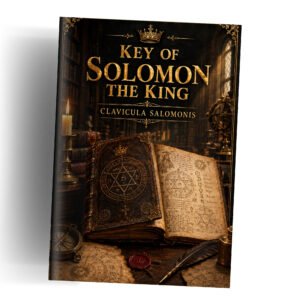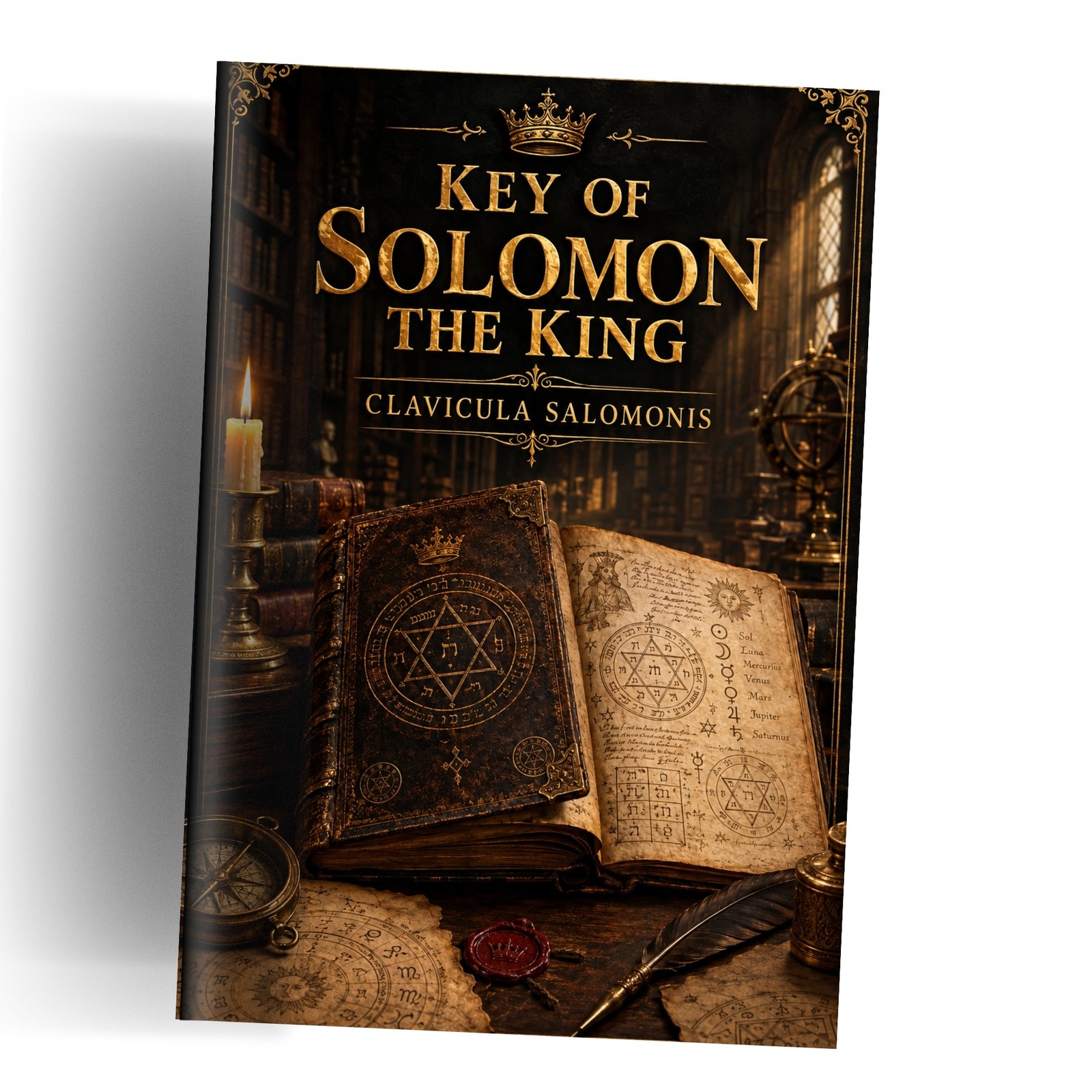
The Key of Solomon, known in Latin as Clavicula Salomonis, is one of the most influential grimoires (magical textbooks) in Western occult history. Though attributed to the biblical King Solomon — famed in folklore for his wisdom and command over spirits — the text was actually compiled by unknown authors during the Middle Ages, with surviving manuscripts dating primarily from the 14th to 17th centuries.
Origins and History
The grimoire draws on a mix of Jewish mysticism, Christian angelology, Greek and Hellenistic magical traditions, and Arabic astrological practices. Legend holds that Solomon received his magical knowledge and power directly from God, using it to command demons and spirits to build the Temple of Jerusalem. While no genuine ancient text by Solomon exists, the association gave the grimoire an air of authority and mystique that helped it spread across Europe.
Structure and Content
The Key of Solomon is typically divided into two books:
- Book One focuses on conjurations, invocations, and rituals for summoning spirits — including instructions on preparing the magician, timing rituals according to planetary hours, and constructing magic circles for protection.
- Book Two deals with practical matters: fasting, purification rites, consecration of tools, and the creation of pentacles (magical talismans) used for specific purposes like love, protection, wealth, or gaining favor.
The text also includes detailed instructions for crafting magical tools — the sword, wand, ring, and robes — along with specific prayers and Hebrew/Latin invocations believed necessary to safely contact spiritual entities.