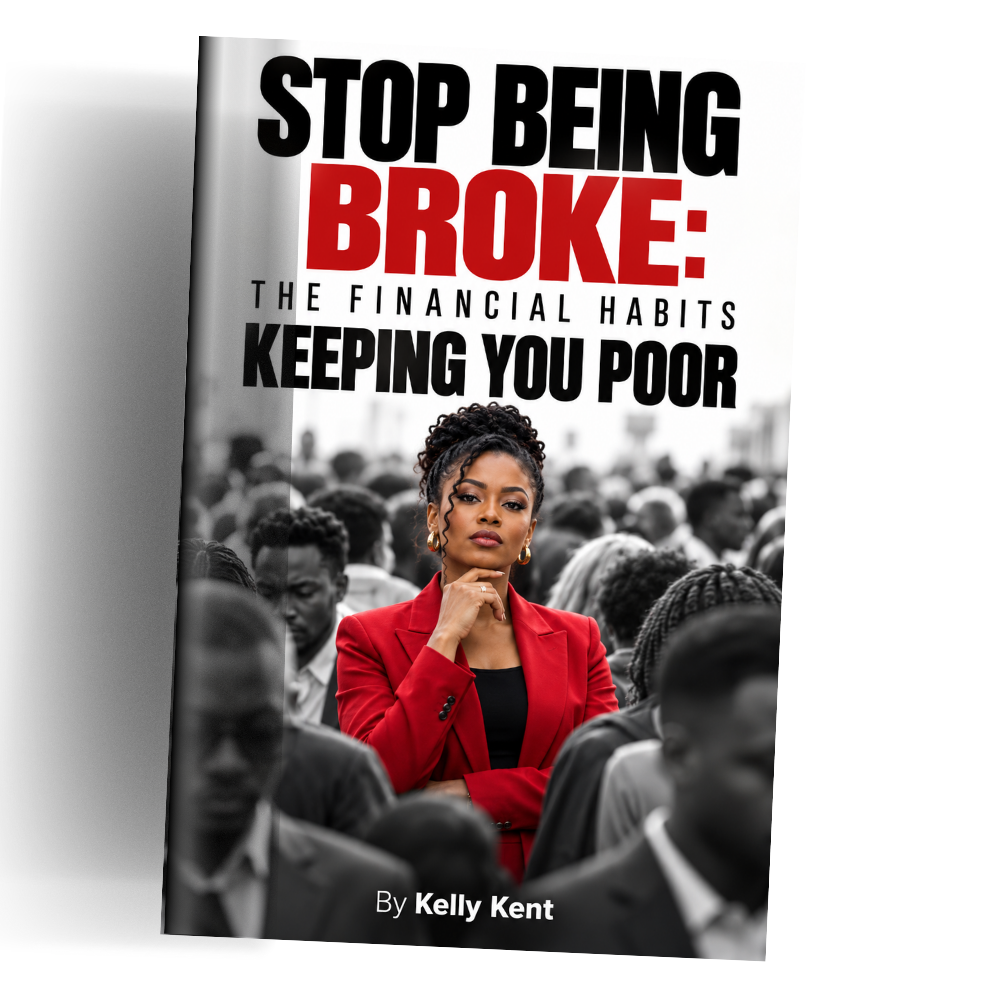
Are you earning money but still ending the month with nothing?
Not everyone who struggles financially is poor because of their habits. Low wages, unstable work, rising prices and family responsibilities are real. But some patterns do quietly widen the gap between what you earn and what you keep, and those are the part you can change.
Stop Being Broke: The Financial Habits Keeping You Poor is an honest, practical guide to spotting those patterns and replacing them, without shame, hype or get-rich-quick promises.
What you’ll learn
- Why a money pattern is different from a money problem, and how to find yours
- How lifestyle inflation swallows raises, and how to stop it
- The real cost of loans, credit cards, buy-now-pay-later and quick app loans
- How to break emotional spending and stop buying to look successful
- How to see where your money actually goes and build a budget that fits your life
- Why saving “what’s left” fails, and how to build an emergency fund on a low or irregular income
- How to handle family, friends and financial pressure without guilt
- How to plan ahead, spot scams and risky “opportunities”, and understand compound interest, inflation and fees
- How to recover from setbacks and turn small habits into a system that lasts
- The difference between income, assets, net worth and real wealth
What’s inside
- Introduction and 15 in-depth chapters, plus a conclusion
- A 30-Day Financial Reset Challenge with one small action per day
- A personal financial self-assessment
- A financial action-planning worksheet
- Exercises throughout: money-pattern audit, debt inventory, budget template, emergency fund calculator, 12-month progress tracker and more
- A glossary of key financial terms
- Worked examples with clear, hypothetical numbers
Who this book is for
- Employees living paycheck to paycheck
- Young adults starting their financial journey
- Freelancers and business owners whose income is irregular
- Anyone stuck in a cycle of debt, impulse spending or “I don’t know where it all goes”
Why readers love this book
- It speaks to people across income levels and countries, from Accra and Lagos to
- Nairobi, Manchester and Toronto. It notes where banking rules, products and laws differ, so it never assumes one country’s system fits everyone. And it asks for steady, realistic progress instead of overnight transformation.